Y Combinator’s latest Demo Day presented a distinctive group of startups, with a strong emphasis on deep technology compared to previous cohorts. Early-stage venture capitalists highlighted nine startups as the most promising, noting that while the ideas seemed futuristic, valuations remained relatively grounded.
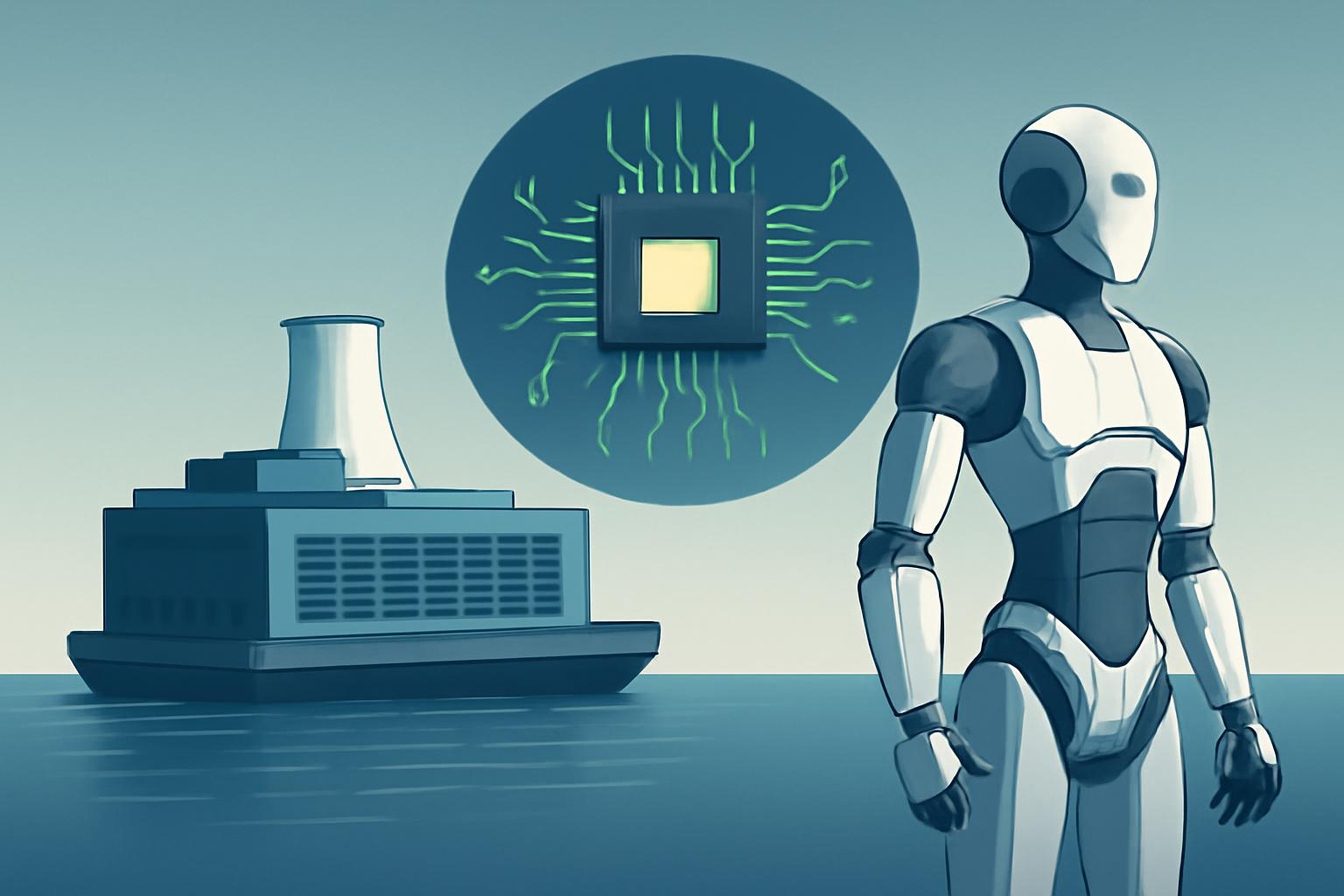
One standout is Atomarine, which plans to deploy data centers on floating barges powered initially by gas and eventually by nuclear reactors. This approach aims to address power shortages and community resistance to land-based data centers by leveraging seawater for cooling. The company has reportedly secured over $4 billion in customer interest.
Dipole Labs is developing optical networking hardware designed to improve data transfer efficiency within AI data centers. Their optical switch eliminates the traditional light-to-electrical signal conversions, reducing power consumption and heat generation, which is critical for costly GPU clusters.
Isengard focuses on producing jet-powered strike and counter-drones domestically within allied countries at lower costs than traditional defense contractors. Co-founded by a former Australian Army officer, the startup is already generating significant revenue and has attracted strong investor interest.
Lamb Labs is creating custom inference chips that hardcode AI model weights directly into silicon, aiming to reduce the energy demands typical of traditional AI chips during inference by eliminating memory bandwidth bottlenecks.
Another company is collecting real-world video data of humans performing tasks to train robots, partnering with publicly traded firms and capturing data across diverse environments. This effort supports the growing experimentation with task automation and human-robot collaboration.
Nori Robotics offers an affordable humanoid robot capable of household chores like cleaning and folding clothes. Priced around $1,600, it presents a more accessible option compared to other humanoid robots, potentially advancing the adoption of home robots for everyday tasks.
A robotics startup is developing autonomous machines capable of heavy lifting, currently installing solar panels across the U.S. Their long-term vision includes automating construction for Mars colonization, with contracts secured through 2027 and plans for exploratory missions by 2028.
Parasma is exploring the use of human brain cells to power computing, aiming to create more energy-efficient alternatives to current AI hardware.
Waddle Labs is building an API layer that uses large language model agents to write robot control code. This technology allows developers to command robots in natural language, with AI autonomously generating and validating executable code, significantly simplifying robot programming.
These startups reflect a shift toward tackling complex technological challenges with innovative approaches, signaling evolving priorities in the startup ecosystem and potential impacts across computing, robotics, and defense sectors.