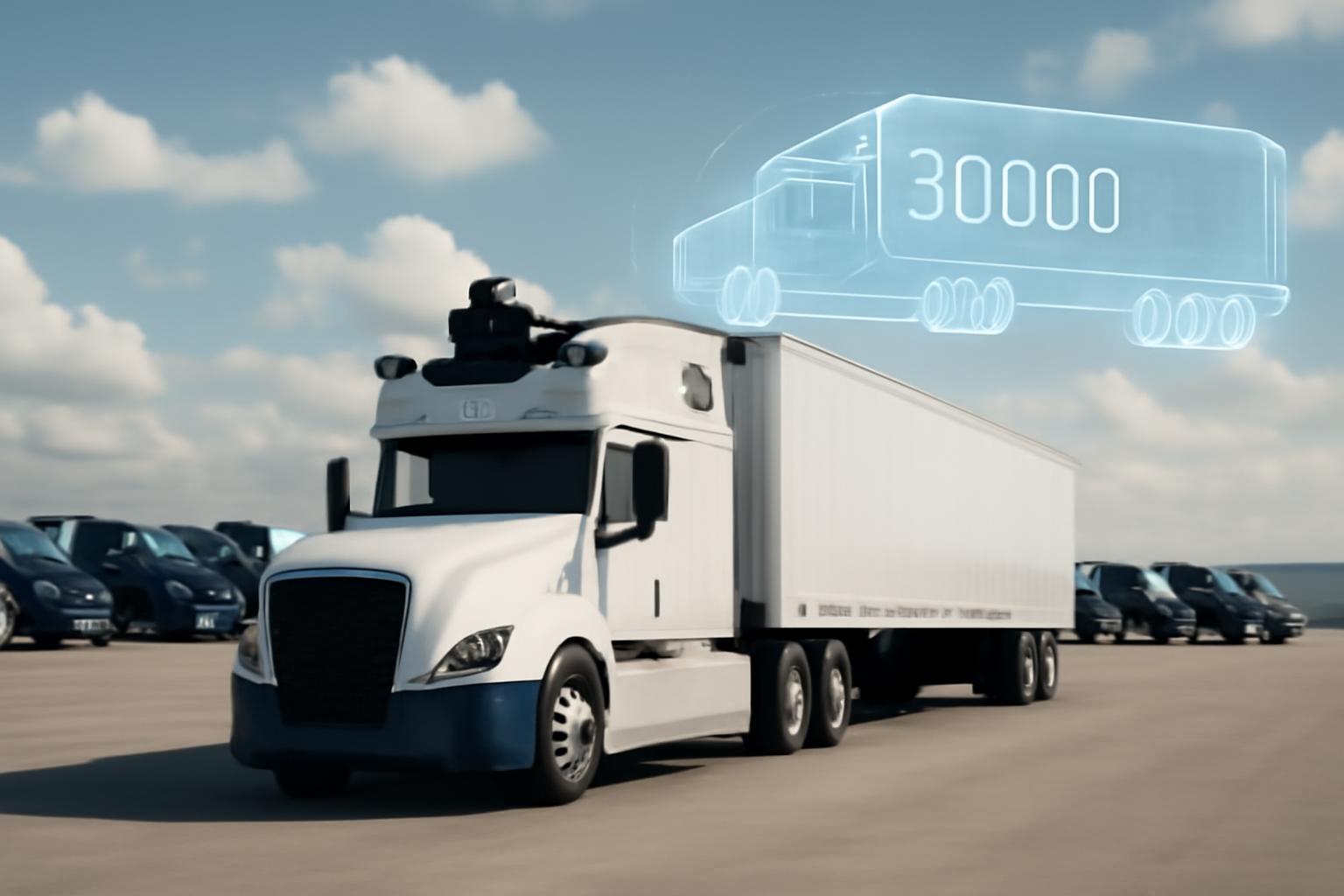
Aurora, a company specializing in autonomous vehicle technology, has outlined ambitious plans to operate more than 30,000 self-driving trucks by the end of 2030, generating approximately $5 billion in annual revenue. This projection marks a significant increase from its expected fleet of 200 driverless trucks and $80 million revenue run rate by the close of 2026.
David Maday, Aurora's CFO, emphasized that while the target may seem large within the autonomy sector, it represents a relatively small fraction of the overall truck market. He noted that major truck manufacturers produce between 250,000 and 300,000 new trucks annually, suggesting Aurora's goal is achievable within this context.
Currently, Aurora operates a transportation-as-a-service model, owning and managing a limited fleet of about 500 trucks. Customers, including logistics firms like Detmar Logistics and Werner, pay roughly $2 per mile, which includes fuel surcharges. However, Aurora plans to transition to a driver-as-a-service model starting next year. Under this approach, customers will purchase the trucks themselves and pay Aurora a per-mile fee of about $0.85 for the autonomous driving technology, while maintaining ownership and upkeep of the vehicles.
This shift is critical for scalability, as it removes the trucks from Aurora's balance sheet. The company anticipates reaching breakeven gross margins by mid-2027 with around 500 trucks in operation.
A key milestone will be the introduction of Aurora's third-generation autonomous hardware at the end of 2027. Developed and financed by partner Aumovio (formerly Continental), this mass-produced hardware package includes sensors and computing systems essential for self-driving capabilities. Aumovio will also handle servicing and repairs, reducing Aurora's operational burden.
Aurora plans to expand its geographic reach beyond its current Southern U.S. focus to cover most of the continental United States by 2030. Maday also indicated that improved cost structures expected by 2028 could pave the way for Aurora's eventual entry into the robotaxi market.
Despite skepticism from investors, reflected in a recent decline in Aurora's share price, the company remains confident in its growth trajectory and the transformative potential of its autonomous trucking technology.