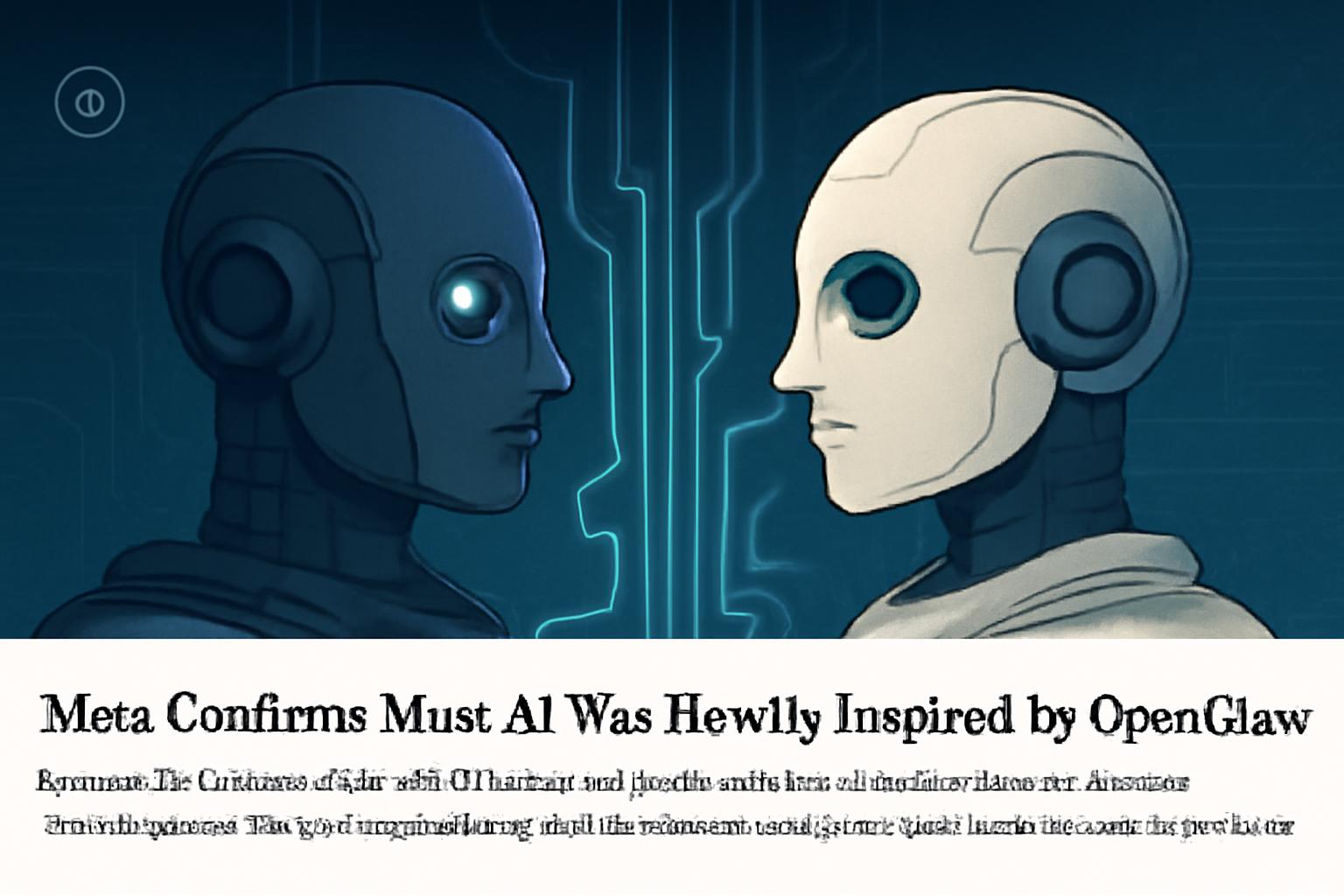
Meta has confirmed that its AI assistant Muse was heavily inspired by the open source AI agent OpenClaw, though the company insists Muse was built from scratch. Nat Friedman, head of product at Meta’s Superintelligence Labs, addressed the similarities in a post on X, explaining that the team admired OpenClaw's design and aimed to create a scalable, consumer-friendly version for billions of users.
OpenClaw, created by Peter Steinberger, gained attention for its innovative approach to personal AI agents, including a configuration file called SOUL.md that defines the agent’s personality and behavior. Users noticed that Muse’s system files and SOUL.md closely resemble those of OpenClaw, with nearly identical content and file names.
Friedman acknowledged these parallels, stating that Meta’s team believed Steinberger had "got those things exactly right." He added that after using OpenClaw earlier in the year, Meta invested in hardware to develop Muse and sought to build a safe, secure, and scalable AI agent inspired by OpenClaw’s pioneering work.
The Muse app has seen strong adoption, recently reaching the top spot on the U.S. App Store and surpassing ChatGPT’s launch metrics when adjusted for platform and market availability. Meta declined to provide further comment beyond Friedman’s statements.
This development highlights Meta’s approach of drawing on successful open source projects to accelerate AI innovation, while tailoring products for broader consumer use. Muse’s rise also underscores growing competition in the AI assistant space, where ease of use and scalability are key factors for widespread adoption.