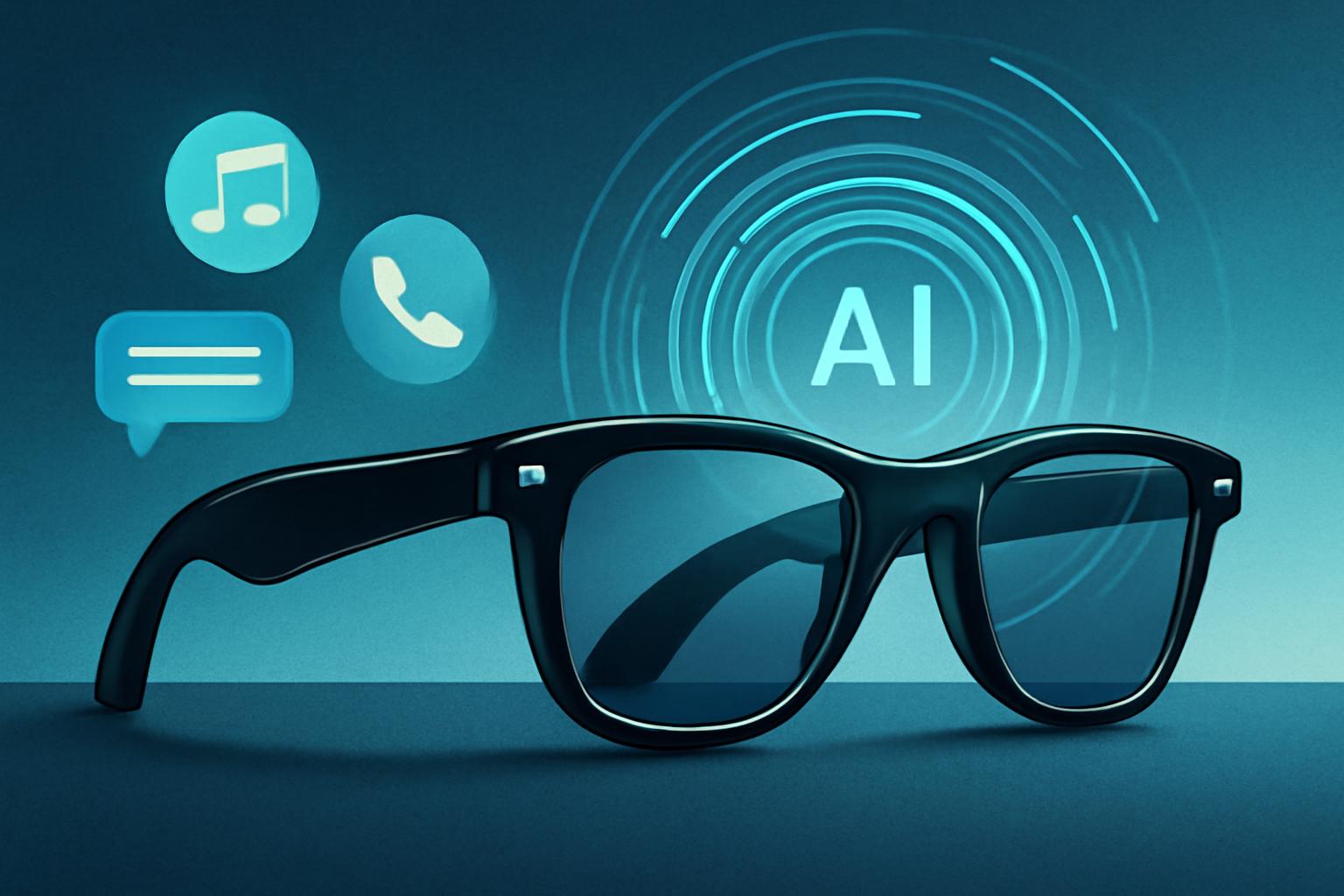
Meta announced its first camera-free AI glasses, the Ray-Ban Meta Audio, at its Connect 2026 event. These audio-only glasses are designed to address privacy concerns linked to earlier AI glasses that included cameras, which had drawn criticism for potential misuse. The new glasses support listening to music and podcasts, making calls, translating speech, and interacting with Meta’s AI assistant, Muse.
Developed in partnership with EssilorLuxottica, the Ray-Ban Meta Audio glasses start at $349. Without cameras, the glasses are slimmer and lighter, weighing just 43 grams. They feature adjustable temple tips, swappable nose pads, overextension hinges, and a battery life of up to 12 hours per charge, extendable to 48 hours with the charging case.
Available in 23 color and lens combinations, the glasses come in two styles: a retro-inspired “Clubmaster” and a classic rectangular “Burbank.” Prescription lenses are also an option. Preorders open on October 13.
Alongside the camera-free model, Meta revealed the next generation of AI glasses with cameras, the Ray-Ban Meta (Gen 3), which includes new Aviator and Zena frame styles. These glasses feature a 12 MP camera capable of 3K Ultra HD video, a six-microphone array, and up to nine hours of battery life.
Meta continues to expand its AI glasses lineup with new styles, colors, and global availability. The company also highlighted upcoming software enhancements such as Dolby Atmos Capture, improved photo selection, customizable audio modes, hearing enhancements, and a privacy-focused “private processing” feature designed to keep user data secure.
Meta’s move to introduce camera-free AI glasses reflects an effort to rebuild trust by prioritizing privacy while still integrating AI functionalities, positioning the product as a competitor to AI-enabled audio devices like Apple’s Siri-powered AirPods.