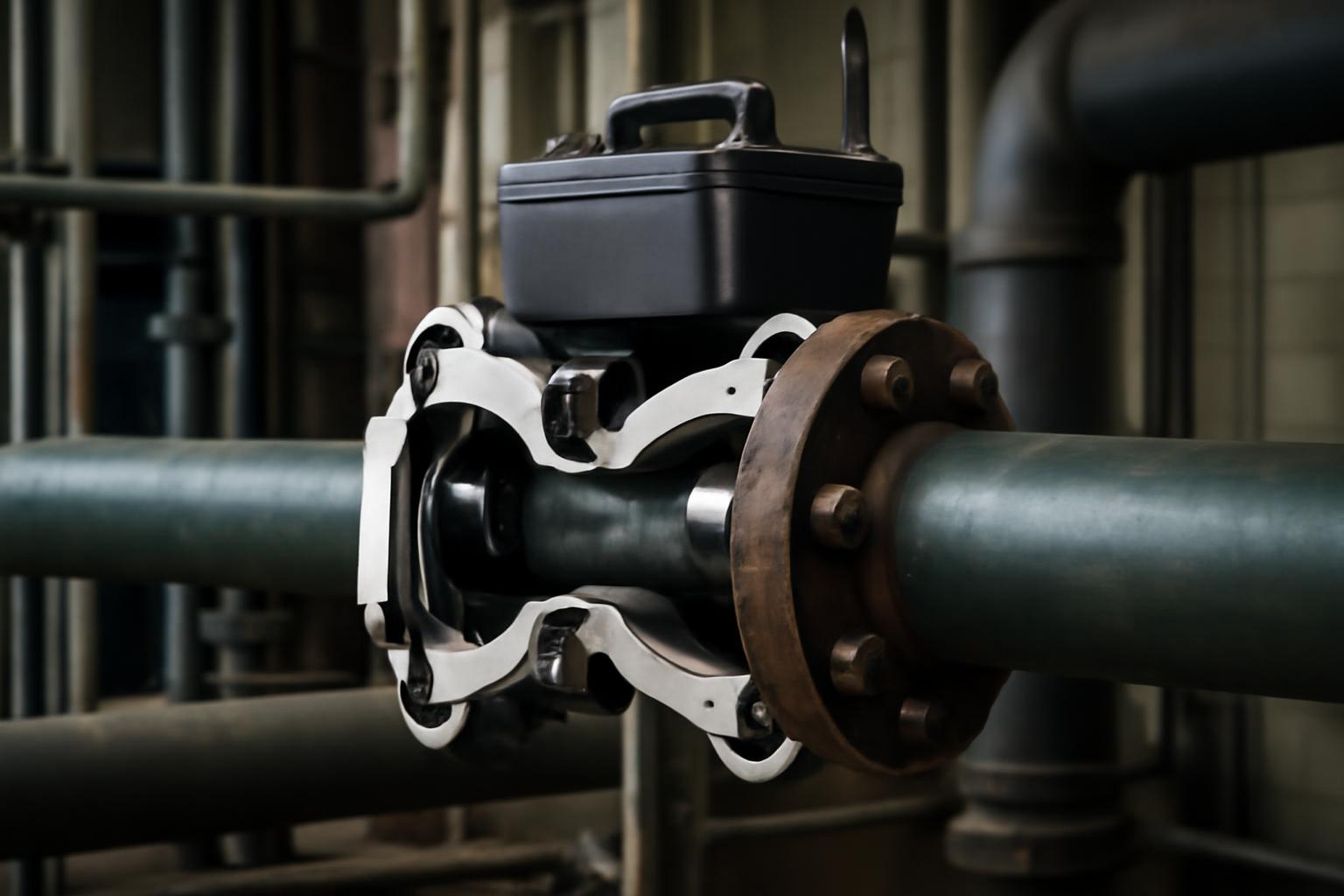
Lindsey Elliott, founder of Nexterity and former ExxonMobil engineer, has developed a remote-controlled robot to automate the challenging and injury-prone task of bolting pipe flange joints. These bolts, essential for connecting pipe sections in oil, gas, petrochemical, and other industries, require significant manual labor that often leads to worker fatigue and injuries.
The robot consists of two main components that clamp around pipes ranging from two to eight inches in diameter, a size range that covers about 80% of pipes used in relevant industries. Powered by batteries, the device can slide along the pipe and simultaneously loosen or tighten four bolts, significantly speeding up the process.
Designed to be portable, the robot fits into a Pelican case and can be carried by a single worker, facilitating easy deployment across different job sites. Nexterity plans to offer the robot as rental equipment, providing flexibility for construction and maintenance operations.
Elliott’s design emerged from extensive discussions with industry experts, including participants at the Bolting Symposium and members of the American Society of Mechanical Engineers’ Pressure Vessels & Piping Division. These conversations highlighted the repetitive nature of pipe sizes and the opportunity for automation to improve productivity in a sector facing labor shortages.
Beyond oil and gas, the technology has potential applications in water treatment, food and beverage, mining, nuclear, and sustainable manufacturing facilities, all of which rely on similar piping infrastructure. By automating a physically demanding task, Nexterity aims to enhance worker safety and operational efficiency in these critical industries.