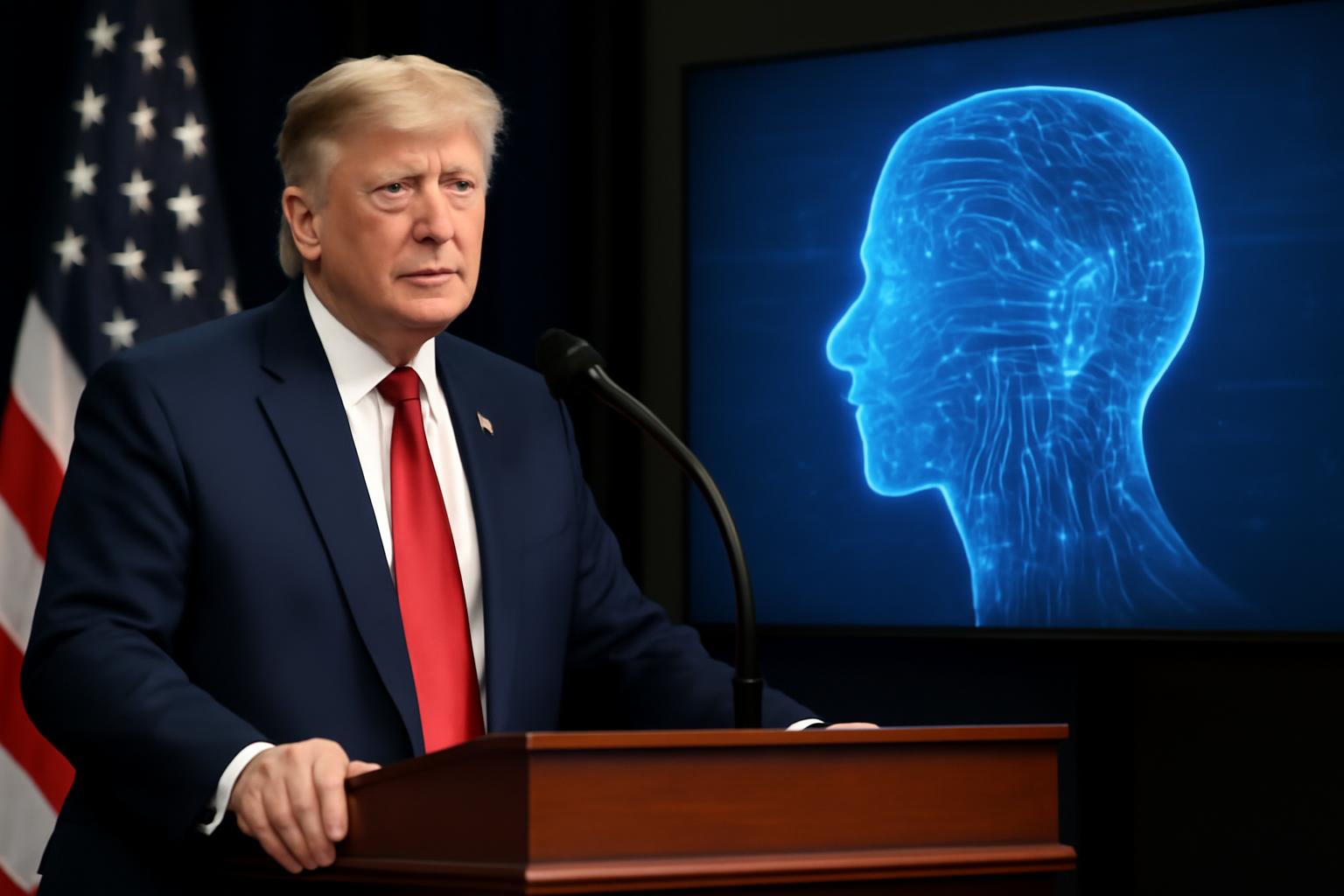
The Trump administration has formally replaced the term "artificial intelligence" with "super intelligence" in official communications, as part of a broader effort to reshape public perception of AI technologies. This change was announced alongside a new executive order and a "Joint Commitment on Frontier Responsibilities," a non-binding safety pact signed by leading AI executives.
The pact, described by President Trump as "morally binding" but lacking legal enforceability, was signed during a high-profile gathering of top technology figures including Mark Zuckerberg, Jeff Bezos, Elon Musk, and Anthropic CEO Dario Amodei. The event marked a notable moment of engagement between the government and AI industry leaders, despite previous tensions, particularly around Anthropic’s standing with parts of the administration.
While the agreement itself is voluntary and was reportedly assembled hastily—evidenced by a misspelling of "United States" on the document—the symbolic value of the meeting and the pact is significant. It reflects an attempt by the administration to address concerns about AI safety without imposing formal regulations.
Industry observers remain skeptical about the pact's practical impact. TechCrunch’s Equity podcast hosts noted that the agreement is unlikely to result in substantive changes, characterizing it more as a public relations move than a regulatory milestone. The rebranding to "super intelligence" appears aimed at softening the narrative around AI, shifting from fear of job loss and existential risk to a more controlled and positive framing.
The event also highlighted ongoing internal divisions within the U.S. government regarding AI policy. While some officials, such as the Treasury Secretary, have shown support for companies like Anthropic, others, including the Defense Department, continue to view certain AI firms with suspicion over national security concerns.
Overall, the administration’s actions underscore a complex and evolving relationship with the AI sector, balancing the need to maintain technological leadership with growing public and political scrutiny over AI’s risks and benefits.