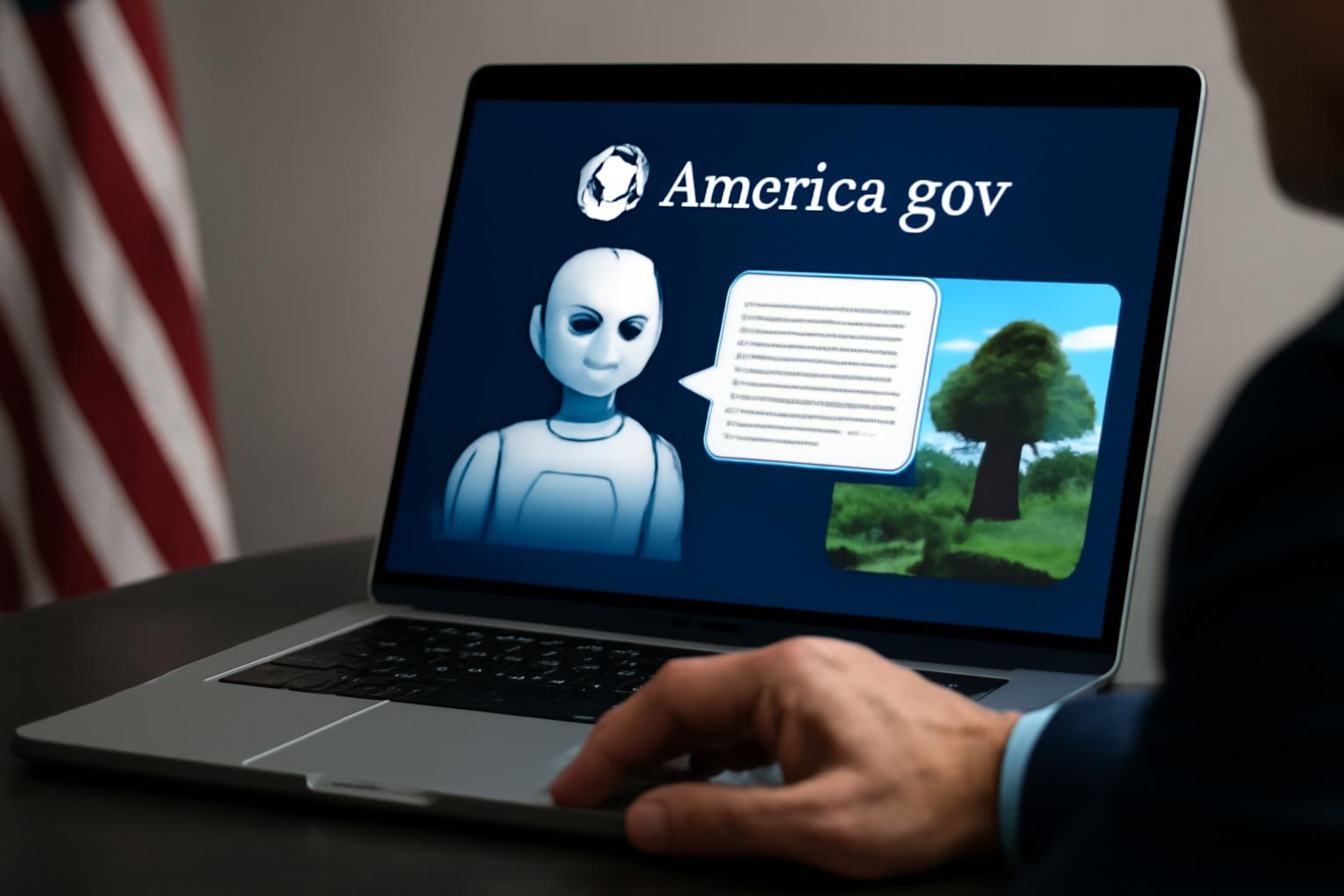
The U.S. government launched its public-facing AI chatbot, America.gov, on Tuesday, developed in partnership with Google and SpaceXAI. Designed to handle public inquiries securely, the chatbot has so far resisted attempts to bypass its safeguards. However, when users ask about Minecraft, the chatbot responds with a long, poetic monologue that initially appears confusing.
This response is actually a rendition of the "End Poem" from Minecraft, originally written by Julian Gough, which players see after completing the game. The poem’s presence in the chatbot is an intentional Easter egg, though the exact contributor responsible for including it remains unclear. Former President Donald Trump mentioned that Edward Coristine, a programmer known as “Big Balls” and associated with Elon Musk’s DOGE project, was a lead engineer on the chatbot.
The poem’s inclusion is notable because it demonstrates a creative integration of cultural references within a government AI tool, rather than a technical glitch or hallucination. The poem itself blends themes of bureaucracy and existential reflection, echoing the challenges faced by users navigating government systems.
This unexpected feature highlights the human creativity embedded in AI development, contrasting with common perceptions of AI-generated content as unoriginal or low quality. The America.gov chatbot’s ability to incorporate such a nuanced literary reference suggests thoughtful design choices by its creators.
Overall, the America.gov chatbot remains a secure and functional tool for public interaction, with this Minecraft poem serving as a unique example of how AI can include cultural easter eggs without compromising its primary purpose.