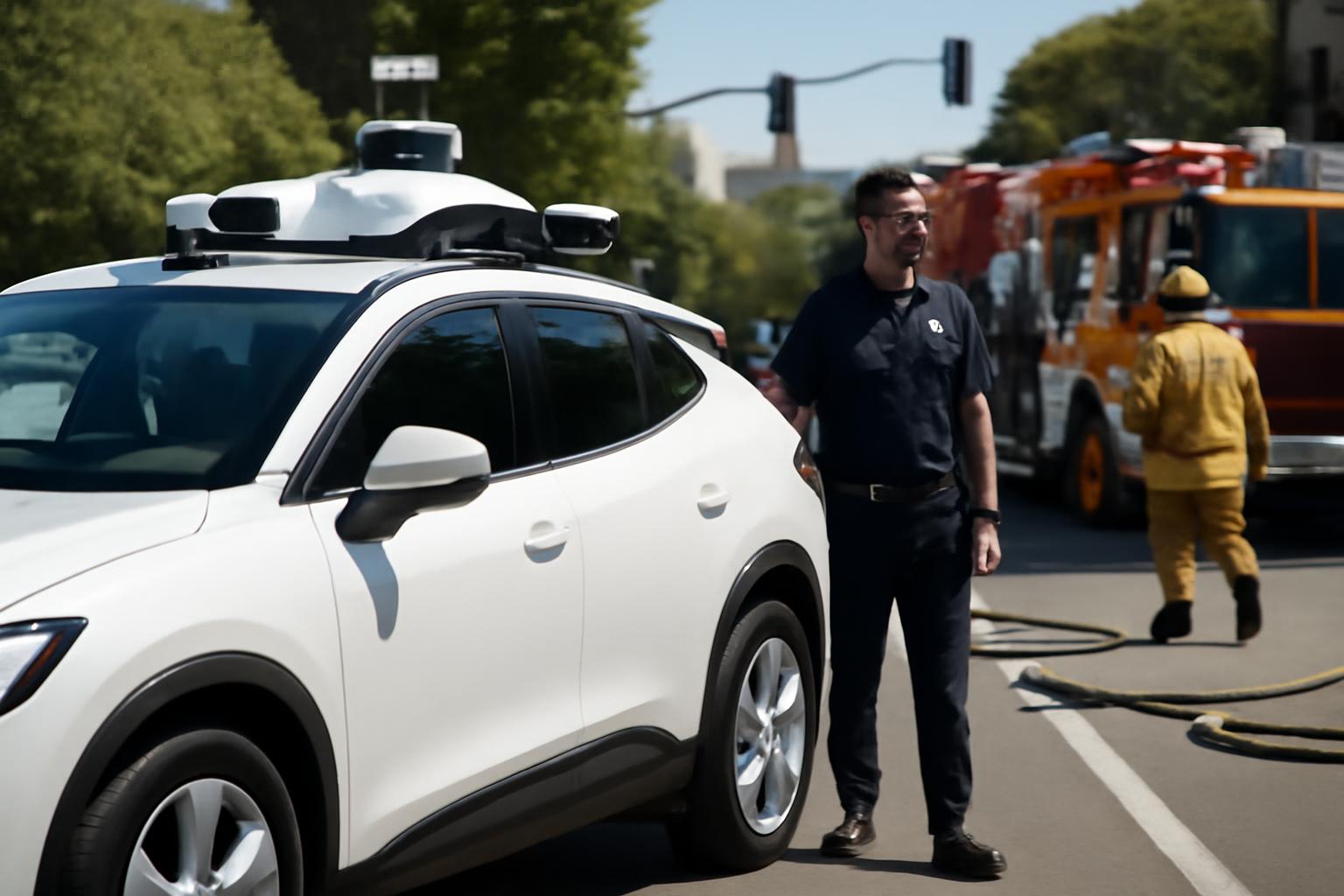
California Governor Gavin Newsom has signed Senate Bill 1246 into law, establishing new regulations for autonomous vehicle (AV) companies operating robotaxis in the state. The legislation addresses concerns about robotaxis interfering with traffic, emergency responders, and public safety in cities like San Francisco, where these vehicles are increasingly common.
The law requires AV developers such as Tesla, Waymo, and Zoox to provide on-the-ground support to first responders when their vehicles cause obstructions or accidents. It also sets a 30-minute limit for robotaxis blocking police or firefighting operations, after which companies may face penalties.
Additionally, the bill mandates that remote operators controlling AVs must be U.S.-based and hold valid U.S. driver’s licenses. Companies must notify local jurisdictions about vehicle locations and statuses during system-wide failures and deploy local incident technicians to assist with accidents or obstructions.
The California Department of Motor Vehicles will oversee the implementation details of the law, which takes effect in July 2028. While the legislation aims to reduce disruptions caused by robotaxis, its effectiveness in fully preventing interference with emergency services remains to be seen.
This law positions California as a frontrunner in regulating the emerging robotaxi industry, potentially influencing other states and federal agencies as autonomous vehicle deployment expands nationwide.
In related mobility news, several startups and established companies announced funding and contracts: EV startup Harbinger secured a $300 million deal with FedEx, Israeli travel tech firm HyperGuest raised $25 million, and maritime intelligence startup Quartermaster closed a $140 million Series B round. Meanwhile, Kodiak will begin driverless deliveries for Ikea on Texas highways later this year.
Automakers and mobility companies also made headlines. BMW revealed its 2027 3 Series available in gas and electric versions, DoorDash expanded its drone delivery service, and Rivian reported record sales for its R2 SUV despite a recent recall. Tesla sold over 480,000 EVs in Q3 and secured $30 billion in credit lines to support future AI and robotics projects, including robotaxis and humanoid robots.
The developments underscore the growing intersection of AI, robotics, and transportation, with regulatory frameworks evolving alongside technological advances.