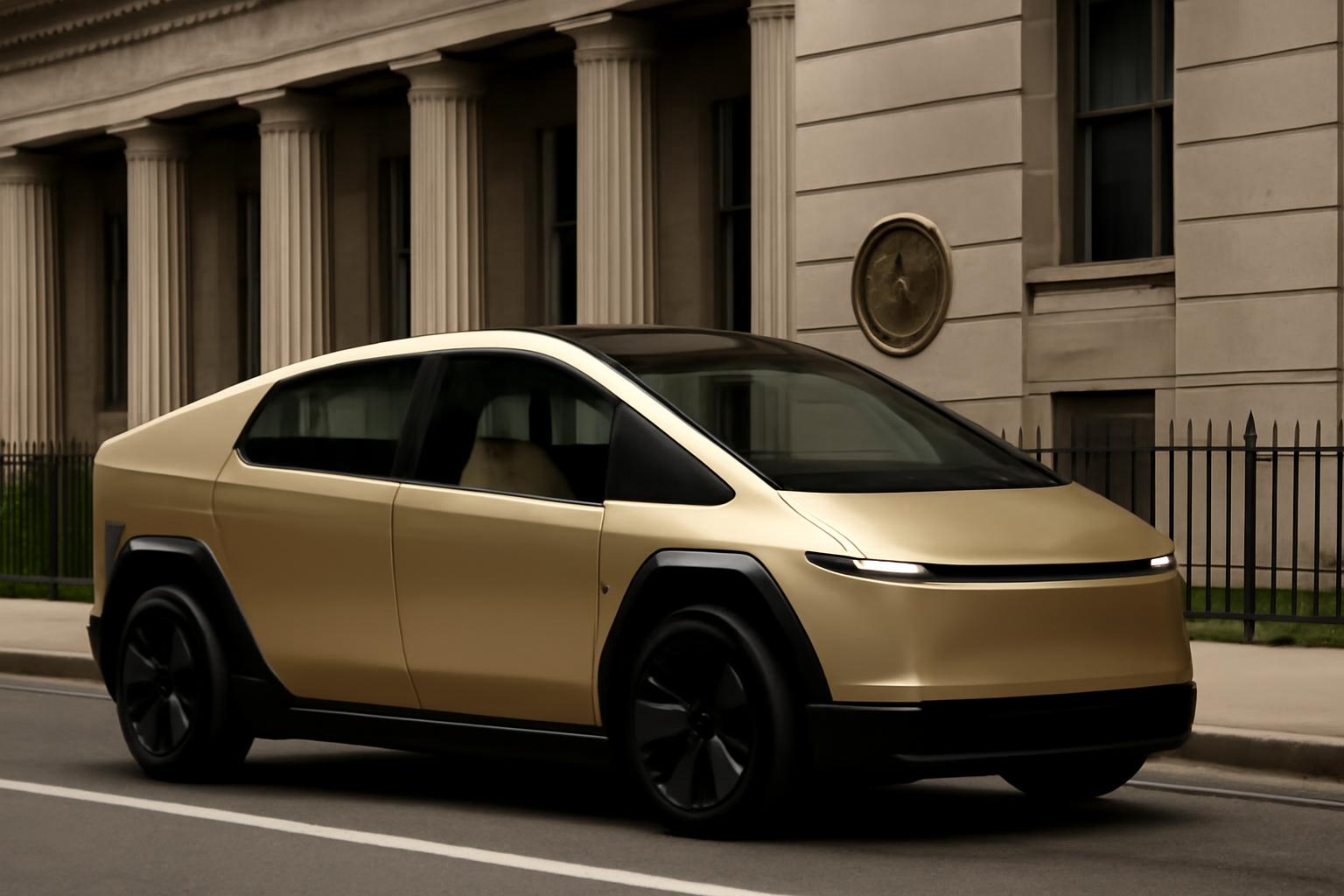
Tesla revealed it will begin selling its autonomous Cybercab vehicles to customers by the end of this year, despite an ongoing federal investigation into the vehicle's compliance with safety regulations. The Cybercab is a gold-colored, two-seater designed without traditional controls such as a steering wheel or brake pedals, intended primarily for use as a robotaxi.
During Tesla's third-quarter earnings call, Lars Moravy, vice president of engineering, explained that current Cybercab production is dedicated to Tesla’s own robotaxi fleet. As the fleet expands, Tesla plans to gradually deliver fully autonomous vehicles to external customers, starting on a small scale to refine delivery, ownership, and fleet management processes.
Tesla first introduced the idea of selling the Cybercab to third parties last month, accompanied by a sign-up form for interested buyers. CEO Elon Musk has long envisioned a large fleet of low-cost robotaxis, initially focusing on enabling existing Tesla vehicles with self-driving software. However, that approach has yet to materialize, and Musk’s recent statements indicate a shift toward dedicated autonomous vehicles like the Cybercab.
Currently, Tesla offers a Full Self-Driving (FSD) system that automates many driving tasks but requires driver supervision. Musk announced that a fully unsupervised version of FSD, which would not require driver attention, is expected to launch in the second quarter of 2024. This timeline suggests that third-party customers could operate Cybercabs as robotaxis before Tesla owners receive the same autonomous capabilities in their personal vehicles.
Musk emphasized that the Cybercab is designed primarily for ride-hailing services rather than personal ownership, with most vehicles expected to remain Tesla-owned and operated as transport services.
However, Tesla faces regulatory challenges. The National Highway Traffic Safety Administration (NHTSA) opened an investigation last month into the Cybercab shortly after it began operating on public roads in Austin. Federal safety standards currently require manual controls such as brake pedals and mirrors, which the Cybercab lacks. While Tesla self-certified compliance with these standards, the NHTSA is reviewing the certification process and technical data.
The investigation’s outcome could impact Tesla’s ability to legally operate and sell the Cybercab, as current regulations do not fully accommodate vehicles designed exclusively for autonomous operation. The Department of Transportation has proposed changes to these requirements, but until finalized, the Cybercab’s deployment remains subject to regulatory approval.