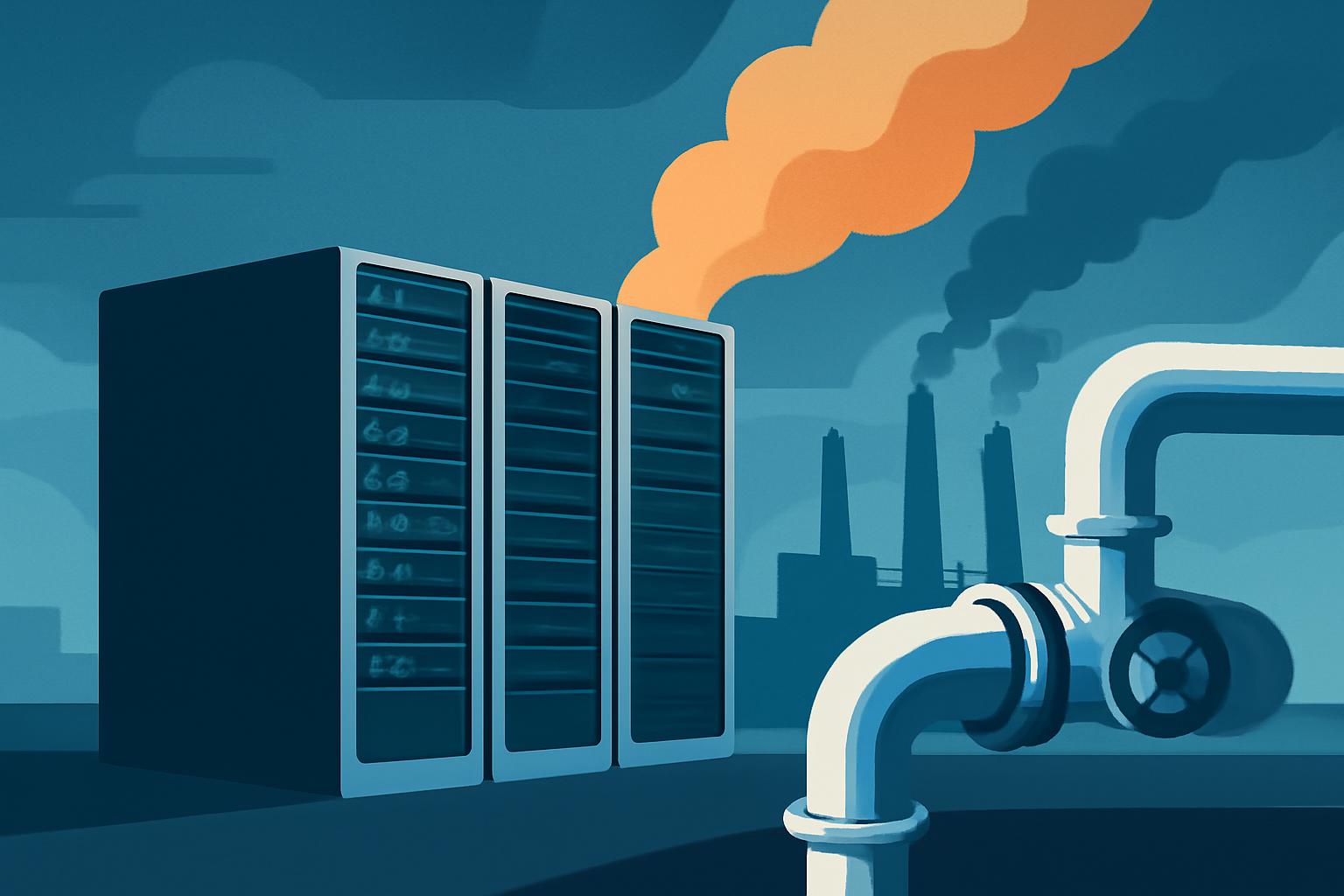
The rapid expansion of artificial intelligence and data processing is driving a sharp increase in natural gas consumption by U.S. data centers. According to a recent BloombergNEF report, by 2035, these facilities could use approximately 18 billion cubic feet of natural gas daily, exceeding the combined consumption of Germany and Japan. This projection is nearly double the estimate made nine months ago and factors in that not all planned data center projects will be completed.
Data centers generating power onsite have attracted attention, with major companies like Meta, Microsoft, Google, and Amazon announcing new natural gas power plants designed to operate independently from the electrical grid. These onsite facilities are expected to consume between 2.9 and 3.4 billion cubic feet of natural gas per day by 2035, roughly equal to current total data center consumption.
However, the largest growth in natural gas demand is anticipated from grid-connected data centers, which could drive an additional 15 billion cubic feet per day of consumption by the power sector. This increase is projected to be five times greater than demand growth from all other grid-connected sectors combined.
This surge in natural gas use could put upward pressure on prices. While current data center expansions have benefited from stable natural gas prices, analysts warn that combined demand from data centers and liquefied natural gas exports may cause significant price increases. Such changes could strain utility customers, even if technology companies can absorb higher costs.
The environmental implications are also notable. Burning one cubic foot of natural gas emits about 60 grams of carbon dioxide equivalent, including emissions from extraction and distribution. The projected increase in data center natural gas consumption could add roughly one million metric tons of greenhouse gases daily, representing about 12% of current U.S. emissions. This raises concerns about the climate impact of the growing data infrastructure supporting AI and digital services.