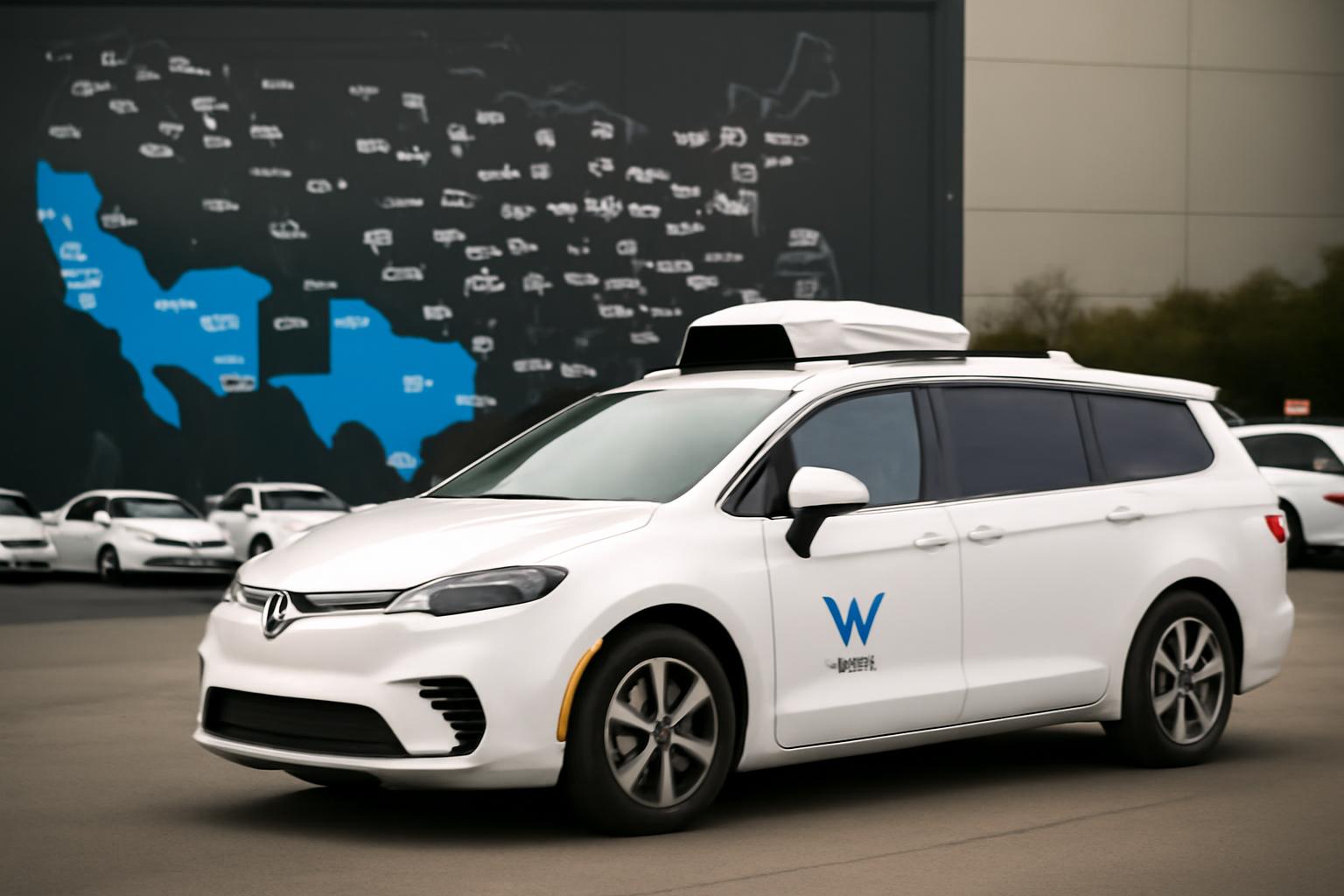
Waymo has significantly increased its robotaxi operations, now serving 15 U.S. cities compared to just three in September 2024. The company averages around 500,000 paid rides per week, reflecting rapid growth in both geographic reach and ridership. However, the majority of Waymo’s roughly 4,000 autonomous vehicles remain concentrated in California and Texas, which together account for about 80% of the fleet.
Texas has seen the most notable recent expansion. The state’s Waymo fleet grew by nearly 50% in the past three weeks, reaching over 1,100 registered autonomous vehicles as of late September. This surge is largely fueled by the deployment of a new robotaxi model, the Ojai minivan, which now comprises about one-third of Waymo’s Texas fleet. The Ojai is a modified Zeekr RT minivan built by China’s Geely Holding Group and equipped with Waymo’s sixth-generation self-driving system and Google’s Gemini AI assistant.
Waymo first launched its commercial robotaxi service in Austin in March 2025 through a partnership with Uber, allowing riders to hail vehicles via the Uber app. Since then, the company has expanded to Dallas, Houston, and San Antonio. The Ojai minivan, designed for durability and high usage, is intended to help Waymo scale its operations and move toward profitability. However, U.S. tariffs on Chinese-made vehicles currently increase the cost of importing these minivans, a cost Waymo appears willing to absorb.
California remains a key market for Waymo, given its Silicon Valley headquarters and early testing history there. The company also operates robotaxis in other states, including Arizona and Florida, with Florida’s three cities expected to see more Ojai vehicles soon. Additional expansion is anticipated in markets like Las Vegas.
Waymo plans to import approximately 5,100 Ojai minivans by the end of 2024, according to research firm MoffettNathanson. These vehicles are shipped from China without connected-car technology and are retrofitted with Waymo’s autonomous driving system at its Arizona facility. This approach aims to balance cost, scale, and technological integration as Waymo accelerates its commercial robotaxi rollout.